Warehouse Automation ROI: A Practical Guide for Asian Operations
Published July 9, 2026 · By RASGR
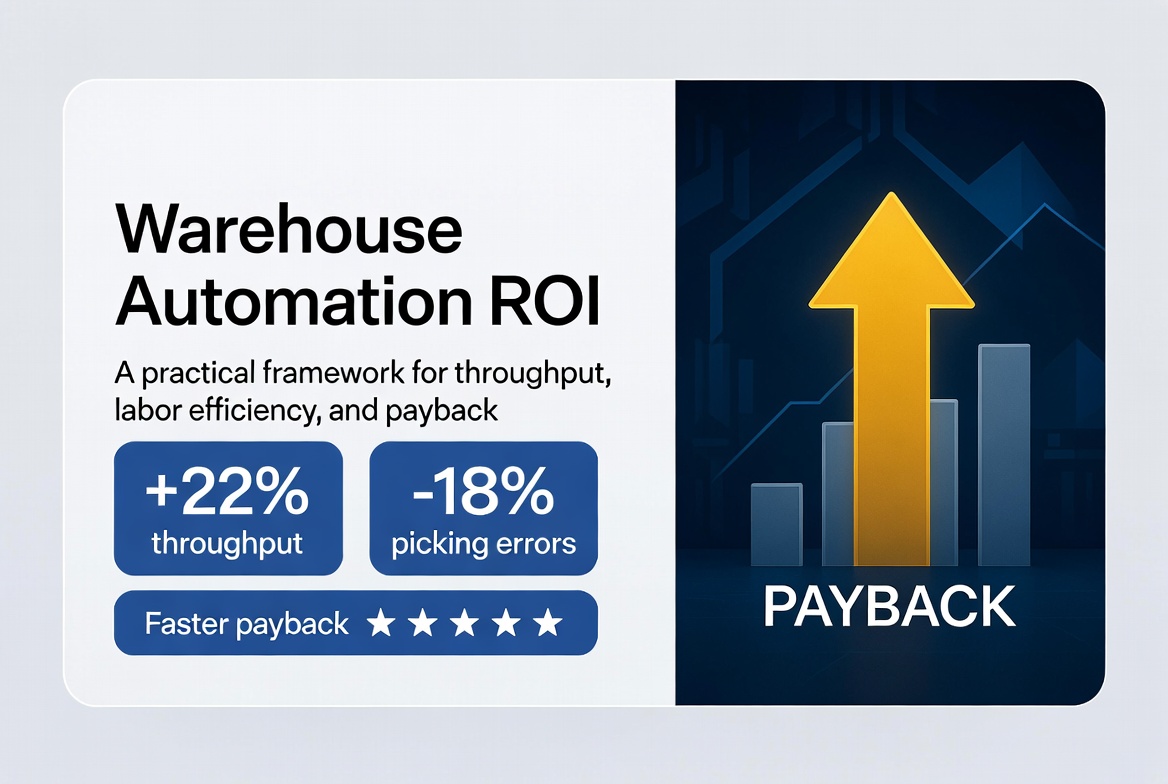
If your warehouse or factory is still heavily dependent on manual labor for material movement, picking, and inventory management, it might be time to evolve. Labor shortages, rising costs, increasing customer expectations, e-commerce volatility, and supply chain disruptions are making traditional approaches unsustainable — especially across Southeast Asia.
The economics have shifted dramatically. What was once considered expensive and risky automation is now one of the smartest strategic investments a medium-to-large operation can make. Companies that implement automation thoughtfully are seeing measurable gains in productivity, accuracy, safety, and long-term competitiveness.
Why Warehouse Automation Now?
Labor costs in Southeast Asia have risen 7 to 12 percent annually since 2020, while the cost of automation technology has dropped 30 to 40 percent. The crossover point has clearly arrived for medium-to-large warehouses and factories in Thailand, Vietnam, Malaysia, and beyond.
Beyond pure cost, businesses today face multiple converging pressures. Chronic skilled labor shortages make it difficult to maintain consistent output. Stricter safety regulations and growing worker expectations increase compliance burdens. E-commerce-driven demand volatility requires faster, more flexible operations. Supply chain disruptions have highlighted the risks of over-reliance on manual processes. At the same time, there is mounting pressure to improve sustainability metrics and reduce carbon footprints. Modern warehouse automation solutions — from AGVs and robotic arms to intelligent storage and AI-driven optimization — address all of these challenges simultaneously, delivering not just efficiency, but true operational resilience.
The Real Numbers
Here are realistic investment and payback figures based on typical RASGR deployments in Asian operations. These numbers reflect real-world projects accounting for local installation, integration, training, and ongoing support costs:
AGV Fleet (5 units): $250K to $400K investment → $80K to $120K annual savings → 2.5 to 4 year break-even.
Conveyor + Sortation Systems: $100K to $200K investment → $40K to $70K annual savings → 2 to 3 years.
RFID Inventory System: $50K to $80K investment → $25K to $40K annual savings → 1.5 to 2 years.
Full AS/RS System: $500K to $1.2M investment → $200K to $350K annual savings → 2.5 to 3.5 years.
These figures can vary based on facility size, existing infrastructure, and level of customisation, but they provide a solid benchmark for planning.
Hidden Savings Most Operators Miss
The true return on investment extends well beyond direct labor cost reduction. Many of the biggest benefits come from improvements that are often overlooked in initial calculations:
- ✓60 to 80 percent fewer picking and sorting errors — dramatically reducing rework, returns, and customer complaints
- ✓Up to 40 percent reduction in workplace injuries — lowering insurance premiums, compensation claims, and lost productivity
- ✓True 24/7 operation capability — without the fatigue, overtime premiums, or shift limitations of manual labor
- ✓Inventory accuracy improving from ~85% to 99.5%+ — reducing stockouts, overstock, carrying costs, and lost sales
- ✓Reduced product damage and lower insurance premiums — plus improved customer satisfaction and brand reputation
Where to Start – A Practical Roadmap
Step 1 — Audit First. Before investing in any technology, conduct a professional process audit. This step alone often uncovers 20 to 30 percent efficiency gains through better workflows, layout optimisation, and data visibility — all before purchasing new equipment. A thorough audit reveals true bottlenecks, data gaps, and opportunities specific to your operation.
Step 2 — Target Low-Hanging Fruit. Focus on high-impact, relatively quick-to-deploy solutions such as AGVs for repetitive long-haul transport or RFID for accurate, automated cycle counting. These deliver fast, visible wins that build internal buy-in and provide early ROI to justify larger investments.
Step 3 — Plan for Full Integration. Sustainable success requires seamless connection between automation hardware, your WMS, ERP, MES, and other existing systems. Poor integration is one of the leading causes of underperforming projects. RASGR specialises in end-to-end integration, ensuring all components work together as one cohesive, scalable operation.
Ready to Calculate Your ROI?
Warehouse automation is no longer a futuristic concept — it is a proven, rapidly payback investment that strengthens your competitiveness, operational resilience, and sustainability across Asia.
Contact RASGR today for a no-obligation site assessment and a personalised ROI projection tailored to your specific facility, product mix, and growth plans.
Email: hamish@rasgr.com Phone: +66 953 198 578